About Me

My photo
A retired Welshman living in wonderful Plymouth in SW England, I’m a family man, novice sailor and boat builder, astrophotographer and motorhomer. With a passion for all things to do with education and the sea and skies above, I have a sense of adventure and innate curiosity. I write three blogs. ‘Arwen’s Meanderings’ charts my learning to sail a self-built John Welsford designed ‘Navigator’ yawl. Look out for her accompanying YouTube channel www.YouTube.com/c/plymouthwelshboy . ‘UnderSouthWestSkies’ follows my learning journey as I take up astronomy and astrophotography; a blog for beginner’s new to these hobbies, just like me. ‘Wherenexthun’, a co-written blog with my wife Maggie, shares how we ‘newbies’ get to grips with owning ‘Bryony’ an ‘Autosleeper’s Broadway EB’ motorhome, and explores our adventures traveling the UK and other parts of Europe. Come participate in one or more of our blogs. Drop us a comment, pass on a tip, share a photo. I look forward to meeting you. Take care now and have fun. Steve (and Maggie)

Wednesday, 19 February 2025

Beginner's guide to taking your first milky way photo - 2 Planning

 Beginners guide to getting your first milky way photograph – 2

This is the second in a series of blogs in which I will share my learning journey thus far towards obtaining a good milky way night time image. This is my second year chasing down this aspiration!  Last year I dabbled but learned lots. This year, I want to ‘nail’ one or two good images at local SW locations I have listed in my notebook. It’s a mission!

If you have just arrived at this page, why not go back a blog post and read the first post in this series about ‘equipment needed’ for milky way photography. 


This blog post series aims to share what I have learned and achieved thus far to help encourage those of you seeking your first milky way image.

Please remember I am still at the very beginning of my learning journey. I am no expert. I claim no expertise, so, a complete beginner to astronomy and astrophotography. This entire blog is written from that perspective – a chronicle of my learning journey written by a beginner for other beginners. I know very little about anything frankly but therein lies the attraction. If I can do it with my very limited knowledge – then so can you; and probably better, as I am a rather slow learner at the best of times. If I have made any mistakes in my posts, I apologise. Please drop me a comment highlighting the issue and I will correct it immediately.

I will not be going into huge depth about how things work and why we do things the way we do. I will give references for you if you wish to pursue these areas further. I’m not dismissing the importance of having a theoretical understanding – its critical – I’m just saying its not the focus of these blog posts. My aim, is to just get you out there, obtaining a first milky way image.

There is soooooo much wrong with this image but at the time I was chuffed to bits with it. A very early selfie effort, poorly processed. As always, it is my post processing skills letting me down

Two more from that same session last year - they show me at the start of my milky way learning journey
Both are single shot images 


To help you achieve this, I will outline some simple answers to these questions:

1.            What equipment do we need?

2.            What advanced planning is needed to ensure success on the night?

3.            What base settings can we use to help us get success?

4.            What foreground composition considerations do we need to make?

5.            What are the different techniques for getting a milky way photograph?

6.            What do we need to consider if we want to do a milky way selfie shot?

7.            How can we improve our milky way photography skills?

8.            What is a ‘beginner’ workflow for post editing our milky way photographs? 


So, today’s question – 2. What advanced planning is needed to ensure success on the night?

If I was logical I would go through questions 3 – 6 first and then come back to planning, but I don’t think logically, so bad luck! In my head, knowing a little more about the milky way will help us better understand the reasoning behind the settings and techniques we use – well, that’s my thinking; most of the time I’m wrong but here we go! It worked for me – maybe it might work for you too. If not – skip forward to future posts and come back to this one at the end.

I subdivide this question about planning into these topics:

  • keeping safe and warm
  • knowing where and what orientation the milky way can be found in 
  • weather on the night
  • finding a dark sky site
  • scouting a location during daytime
  • shoot for the follow up editing  

Keeping safe and keeping warm.

In the dark, navigating varying terrain, carrying equipment – possibly remote, isolated location with variable internet and mobile smartphone signal! On your own? Worst case scenario – could you survive safely until help arrived, should the unfortunate happen? A trip or fall?

Or how about standing around for lengthy periods of time as temperatures drop, can you remain comfortable, warm, positive, and focused on the tasks in hand?

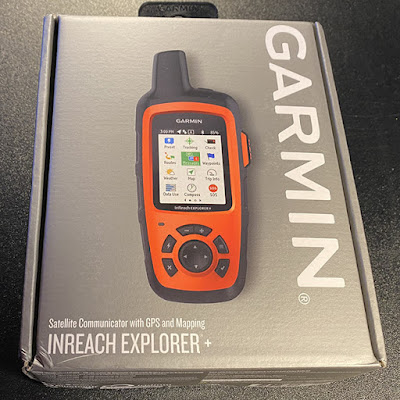
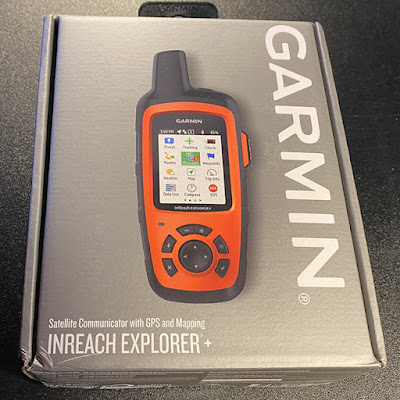
First off – emergency communications – carry a personal locator beacon (PLB). Something that sends out a distress signal via satellite to alert local rescue services. If it sends simple text messages, even better! I use the Garmin Inreach Explorer for everything – sailing cycling, walking, astronomy/astrophotography, mountaineering (not that I do any of the latter nowadays – the knees can’t take it). It sends a distress signal, shows basic maps of locality and allows the sending of simple preset messages and texts to family. It is a subscription based PLB however. Don’t just rely on a smartphone – there are areas of Dartmoor and our south Devon coastline, for example,  that I visit at night where mobile signal is at best intermittent to non-existent – even in this day and age of technology advancement!

Safety equipment to carry - Whistle, compass and map of locality; first aid kit, survival bivvy bag and survival foil space blankets. Multitool or good penknife. Small thermal insulating closed cell folding seat mat. Know how to use them properly! I also carry two ‘long time’ red glow in the dark snap sticks – should I need rescue assistance – they help rescuers locate you in the dark.

You may consider this overkill – perhaps it is – however, I spent many years doing outdoor education instruction as well as teaching geography. Better to have it than not – trust me on this! Have you got with you stuff that could help you better survive the three hours or so it may take rescuers to get to you – basic question!

And of course – the fundamentals – a route plan left with someone – where are you going, when are you coming back, where will you leave the car? Food and drink for the night – hot drinks; high energy foodstuffs even warm foods. I carry flasks of hot water, teabags, a small bottle of milk, a thermos of soup, sandwiches, chocolate, biscuits, trail bars/trail mix. I find hot water in flasks stays hotter for longer than just white tea.

Keeping warm – I’ve already done a previous post – find it here ( https://undersouthwestskies.blogspot.com/2025/01/beginners-guide-to-how-to-stay-warm-on.html  ).

 Essentially, few, well chosen layers are better than lots of layers! Trapped sweat = damp against the skin = chilling rapidly! Base layers to wick away sweat and trap heat against your skin; mid layers to insulate you but also allow your skin to breathe. Finally, outer shell layer – protects and insulates you from wind, rain and more. Extremities – hands – gloves! So much fiddling and twiddling with buttons, knobs, lenses – I go for a double layer system – base layer of thin fingerless gloves. Outer layer of thicker gloves or woollen mitts. USB thermal handwarmers ready in my pockets!  Two hats – one a Mountain equipment thin micro fleece sort of balaclava that can be a neck buff, a beanie or a balaclava.  A thicker, fleece and thermally lined Berghaus hat with ear piece extensions. And then, of course, my hood from my outer layer.  Don’t forget your feet! I really suffer from cold feet! I go for sturdy light weight Gortex lined waterproof boots with thermal insoles and then proper thermal wool loopstitched socks. As I said, my previous blog post about keeping warm has more details. Do not skimp on your clothing!


Knowing where and in what orientation the milky way can be found

Where to start – this was the bit I didn’t fully understand last year and it left me frustrated on many a night because the Milky Way wasn’t in the right orientation for the shot, I had in my head!

So, some simple milky way basics – all from a northern hemisphere perspective – sorry to southern hemisphere people – but my limited brain capacity can just about cope with this northern stuff!

The location and orientation of the milky way galactic core changes through the year in the northern hemisphere. Here in the south west of England, the core starts appearing at the end of February in the early hours before sunrise. It starts fading from view in late October and can be seen mid evening.  The core can still be seen during January and February but it is so low on the horizon and appearing so briefly, its hardly worth shooting although I know people locally who do so, and very successfully too.

In my neck of the woods, the Milky Way core will be to the SE and flattish in spring during pre-dawn hours and to the SW and flattish again by autumn just after dark falls. Mid-summer – it’s to the south and vertical in orientation and can be seen from around 10.30pm until 2 am ish. Being at latitude 50 degrees, the core always remains pretty close to the horizon. The further south you go, the higher above the horizon, it will appear. In the northern hemisphere the milky way will at some stage appear as an arc across the sky, normally from March to June and then again from August to October.  Someone told me the other day you can see a milky way arch during the winter months as well – west facing.

For southern hemisphere colleagues – I think it goes like this: February rising in SE from around 1 am ish to sunrise. Summer months – long nights due to winter (lucky souls) and the milky way will rise in the E and be almost vertical during the hours of 7pm to dawn. Come autumn – the core begins high in the sky but sinks down to the west from around 9pm to 2 am or so. Hope I got that right!  You get the longer season and longer shooting times in a night!


Two images from last summer. This one was a single exposure shot. The one below was several single shots which were then stacked 


The other point I will make now is this: the best milky way photographs will be taken on a moonless night between a couple of hours after sunset and a couple of hours before sunrise. 


So, how do we plan a milky way shooting session?

I use PhotoPills and Sky Safari Plus! Stellarium and Planit Pro are other apps. Make them your friends! Familiarise yourself with their functions as often as you can.

I love PhotoPills! So many tools and functions available; genuinely useful to a new astrophotographer. Their detailed guides and YouTube channel tutorials give you everything you need to know and learn to get the best from this app.

The planner map is one to really use and understand. It can show the position of the sun, moon and milky way core on a map – a red pin marks your precise location. The milky way icon, a series of white dots of varying size, show precisely where the milky way core and arch will be and at what inclination at any given time during the night. Brilliant! Details about twilight, sunrise; galactic core rise and fall times. Tonnes of useful information in the planner.

And there is then the night time augmented reality screen. Oh my! This is the tool for when you go scout out locations during day time. I LOVE this tool! You can see your proposed scene location through your smart phone screen, as if you were about to take a photo of it. AR then overlays an image of the milky way over it and the screen overlay can then be scrolled forward to the times you propose being there at night – it will show you exactly where in your proposed shot the milky way will appear and at what orientation. It does far more than this – here is a tutorial video on how to use it.  A game changing planning tool.

You can access their tutorial videos here: https://www.photopills.com/videos

The user guide for the app is here:     https://www.photopills.com/user-guide     

https://play.google.com/store/apps/details?id=com.photopills.android.photopills&hl=en


Weather on the night

Clear skies! I can’t remember having many clear sky nights over this last winter season here in the south west of England. Very frustrating when trying to image deep sky objects. Some clouds can add interest and texture to nightscape photos though.

Rule 1 on weather checking. There is no single 100% accurate weather app. Go figure!  So here is my routine for weather checking a potential astrophotography night.

1.       A general forecast overview – the Met Office weather app and if necessary, a deeper dive into its website to look at pressure charts etc. I am a geographer! Love a pressure chart! Can’t resist them! Anyway, getting a general overview of what to expect passing through the night. Not always 100% accurate but normally in the ball park on the night. https://www.metoffice.gov.uk/weather/weather-app 


2.       Clear outside – by First Light Optics – just up the road from me in Exeter. Free download app. Hour by hour cloud coverage percentages, Bortle range of your locality, moon rise and set times. Sunrise and sunset. Sky quality assessments. Dew point temperature, fog risk, humidity levels. Everything colour-coded and easy to read. Great app and overall, one I have found to be very accurate most nights. Brilliant planning tool and you can certainly in the UK enter your specific location to get as close as you can get locality summary. What it allows you to do is choose a specific shooting time window corresponding with your planning on PhotoPills and then check what the weather will be like for that time.   https://clearoutside.com/page/app/    

3.       Windy – a newish app to me but one I am growing to really like – another nerdy geographer one but useful. Three hour block forecasts, radar imagery, cloud layering information, dew point, temperature, rainfall amounts etc. I cross-reference it with Clear Outside.     https://play.google.com/store/apps/details?id=com.windyty.android&hl=en_GB  

I use a few apps for my astrophotography and you can find a blog post here: https://undersouthwestskies.blogspot.com/2025/02/my-beginners-guide-to-useful-apps-for.html


Finding a dark sky site

Light pollution impacts your milky way photography! Well, it does in my area! On the other hand with a south facing coastline that looks out over the English Channel, I am blessed – no large cities between me and the Milky Way over the horizon!


Darksitefinder.com -   https://darksitefinder.com/map/   - Use Bortle scale colouring on maps to show light pollution above you in your area. The higher the number, the worst the pollution. Another site is lightpollutionmap.info.  Remember, the categories in your area are approximate for the skies above.

You can find out more about the Bortle classes here:    https://skyandtelescope.org/astronomy-resources/light-pollution-and-astronomy-the-bortle-dark-sky-scale/     and  https://en.wikipedia.org/wiki/Bortle_scale 


Scouting a location during daytime

This is really an important part of your milky way astrophotography planning. Not just for scoping out potential foreground interest objects, but also just purely from a safety viewpoint. On a moonless night in a remote dark sky location – stumbling around in the dark is ill-advised! Its also nigh on impossible to find an interesting foreground composition – because you can barely see the foreground details – its dark! And switching on your white light torch destroys that hard won dark sky eye adaptation you have built up since leaving the car!

Taken at Bigbury on sea when the tide was incoming rapidly! 
Again, getting the data was straight forward - but my post editing skills 😱😭

Using augmented reality in PhotoPills plus the planner tool allows me to go in advance to south coast destinations and plan my shots. I can hunt around for interesting foreground compositions (more on that in a later post) and work out where the milky way will be in such a composition.  I have literally spent the last two months walking the coast trying to find some interesting spots for this forthcoming 2025 milky way season. They are listed in my notebook – shots to aim for!  I actually take a smartphone photo of my selected shooting location as well – the possible view and, sadly I must admit, one of the actual spot where I propose placing a tripod. That sounds so…..anal…..doesn’t it! I work out walking routes, car parking spots, nearest pub to call in at. I try to find spots where I can find some shelter from our prevailing south westerly winds – it’s not a priority but I’ll take an opportunity for some natural shelter if I can find it.  If I’m on a beach – I search for alternative escape routes as well, just in case! All those years on mountain walking and fieldwork trips and expeditions. A safety-first approach, honed!  I tend to stand for most of the night at a location unless it is deep sky astrophotography from behind the car, in which case I sit just inside my boot space – out of the wind. So, if I can find a sheltered spot where I can sit on my folding mat for a few minutes to give my legs a rest, all the better. 

I used PhotoPills AR to try and find a position of the milky way for these early shots. Same shot, same data! And look at how I can post edit butcher a photo!
This year I HAVE to get to grips with editing milky way photographs! 

Down my way, shooting from along the cliff tops, is a frequent thing. So, day time scouting the cliff routes, the drops, the wind funnel areas – its critical! I don’t want to be calling out colleagues I know who work in our local coastguard cliff rescue teams on a cold summer night because I stupidly took a step backwards and fell off a cliff! Be sensible – do your day time scouting – for safety purposes as well as for seeking out great foreground composition opportunities.

One final tip – I often do an image search on the internet and in the various Milky way Facebook groups I am in to find what local photographers in my area have done as compositions. I’m not looking to necessarily do the same as them but it is a useful source of inspiration and information – what settings did they use? What was their foreground composition? So, a quick search St Michael’s Mount and Milky Way, for example, gives me plenty of ideas! 

Shoot for the edit
This was a piece of advice offered to me on a recent free on-line course I joined. Run via Facebook by Kristina Rose Photography, Kristina started by telling us to always "shoot with the edit in mind". What is the idea you want to convey to the viewer in youir final image? And once you know that, then reverse engineer it.  This is the thinking we will be delving into in the subsequent blog posts. 

Hope this has helped and enthused you to do some milky way photography. By getting familiar with the planning tool apps early on and scouting out potential shooting locations, it will help you better understand what comes next in my blog series - What base astro settings can we use to help us get milky way image success?

In the meantime, if I have anything wrong, drop me a comment and let me know and I will get it corrected immediately. 


PS - it would be easy to say "You haven't made much progress last year on your milky way photography, have you Steve?"

A fair legitimate point. However, the images below were the very first ones I took of the Milky Way, at the start of last year and end of the year before that. Compare them with the ones above and in previous posts - there is some progress - isn't there? 😧😆


I have no idea what happened here - I was trying to capture the galactic core! 😁

My first shot of 'Bryony' our motorhome under the milky way. Taken in 2023.
Compare it with the one at the beginning of this post taken in 2024
Baby steps. Baby steps!!


Sunday, 16 February 2025

Beginner's guide to taking your first milky way photo

 Beginners guide to getting your first milky way photograph

One of my ambitions is to improve my night time landscape astrophotography. particularly my milky way imaging. Last year I dabbled but learned lots. This year I really want to nail one or two good milky way images. I keep a list in a notebook – locations for great milky way landscape shots locally.

My first ever Milky Way selfie
Taken at Mesa Verde Lodge in USA
Single image exposure around 18" using a canon 22mm F/2.8 lens
I obviously moved during the image acquisition - go on see if you can work out why I know that! 😞😆

 I am new to Milky Way photography, a complete newbie to it all, but it is soooo exciting. Passionate about extending my skills in this area of astrophotography, I have started to pick up a few ‘beginner’ tips which I will now share over a series of posts.

But, please remember I am still at the very beginning of my learning journey. I am no expert. I claim no expertise. A complete beginner to astronomy and astrophotographythis entire blog is written from that perspective – a chronicle of my learning journey thus far, written for other beginners. I know very little about anything frankly but therein lies the attraction. If I can do it with my very limited knowledge – then so can you; and probably better, as I am a rather slow learner at the best of times. If I have made any mistakes in my posts, I apologise. Please drop me a comment highlighting the issue and I will correct it immediately.

In this series of milky way posts, I will not be going into huge depth about how things work and why we do things the way we do. I will give references for you if you wish to pursue these areas further. I’m not dismissing the importance of having a theoretical understanding – its critical – I’m just saying its not the focus of these blog posts. My aim, is to just get you out there, obtaining a first milky way image.

To help you achieve this, I will outline some simple answers to these questions:

1.       What equipment do we need?

2.       What advanced planning is needed to ensure success on the night?

3.       What base settings can we use to help us get success?

4.       What foreground composition considerations do we need to make?

5.       What are the different techniques for getting a milky way photograph?

6.       What do we need to consider if we want to do a milky way selfie shot?

7.       How can we improve our milky way photography skills?

8.       What is a ‘beginner’ workflow for post editing our milky way photographs?  


Another first effort from The Broken Spur Motel in Torrey, USA
This is a composition shot - one foreground image and a separate tracked sky shot.
You can tell how bad my post editing 'blending' skills are if you look closely. Another story for another time

1.       What equipment do we need to take with us?

The Galactic Core of the Milky Way (the bright thick bulge around the centre) is big, bright and during the summer months, very prominent. With stars and nebulae scattered throughout, it's also quite colourful. Other parts of the visible Milky Way are just as interesting and attractive – fainter perhaps, but non the less, still beautiful.  So, to get a good chance of capturing it, what equipment do you need?  Well, here is my gear below but at the most basic level, all you will need is a camera, a wide-angle lens, a tripod and a torch!


My equipment:  


·        Canon 800D (modded – but my first images last year were when it was still unmodded – for more about astromodified cameras – see this blog post here:

·        Dummy battery for canon camera

·        Memory card spare

·        Lenses: Samyang 14mm F/2.8     Canon 22mm F/2.8     Canon 50mm F/2.8     Canon kit Lense: 18 – 55mm F/3.2 zoom

·        L bracket and Intervalometer

·        Benbo carbon Fibre tripod, Gorillapod DSLR ball head and graduated dovetail clamp

·        Small dew band heater strip

·        Two 25,000 mAh power banks

·        Head torch

·        Skywatcher Star Adventurer 2i tracker with William Optics wedge and MSM green laser pen; spare AA batteries; spare C2032 disc batteries for the polar illuminator 

·        Safety equipment – Garmin Inreach, first aid kit, survival bivvy bag and blanket

The observant amongst you may have noticed I have missed off filters! I don’t possess any – yet! I’m actively researching this area for this coming season and will post a separate blog about filter choice at a later date.

Outside our lodge one night
Another tracked, stacked and blended composition
I used my Ioptron Skytracker pro with my Canon 800D and canon 22mm F/2.8 lens - I can't remember how many images and what exposure setting it was. I did a separate foreground shot just after dusk as the door lights were switched on; and then blended the two images later. It is the post editing work flow and skills deficiency which is now really holding back my milky way development journey! 


My camera is a crop sensor one – an entry level DSLR which is serving me well. As an APS-C x1.6 crop magnification – it means that my lenses aren’t quite what they seem in focal length. My 50mm canon, for example, is actually 50mm x 1.6 = 80mm focal length in reality. Worth remembering this if your camera is a crop sensor one!  There is plenty on-line about choosing the right kind of DSLR for nightscape astrophotography and I’m not getting into it here – suffice to say my Canon 800D is a sort of entry level DSLR and does a perfectly good job of capturing milky way images.

When considering what lenses you have – you can get relatively good milky way shots with your kit lenses – (I have using my canon 18 – 55mm zoom F/3) but with lenses there are three factors to think about – focal length, maximum aperture (lowest f number) and aberrations. If you are going for milky way landscape shots, then a good wide-angled lens with a maximum fast aperture is a must. The wide angle allows great coverage of the night sky and some foreground interest; the fast aperture – more light gathering.  My 14mm is perfect for general landscape astrophotography but I’m already on the lookout for a good quality 10 – 12mm lens this year! My 50mm (in reality 80mm) lens allows me to really capture close ups of the galactic core in all its glory but because of shorter exposure times before I get star trailing, it is better suited to using on my star tracker!  In wanting to get as much light as possible, an aperture of F/2.8 or even wider, is essential for the fainter areas of the milky way and for being able to use lower ISO settings but beware lens aberrations that may be found at these wider apertures – so do your homework.

(One of the best summaries about cameras and lenses for night sky astrophotography in in Alyn Wallace’s book – ‘Photographing the night sky; technique, planning and processing’. It is pricey and quite a tomb but if you can afford it and want just one really good reference manual to start you off on your nightscape astrophotography journey, I’d heartedly recommend this one. But, it is pricey!!)

Dummy battery – I have a dummy battery which has a USB cable which plugs into a power bank which is velcro’d to one of my tripod legs. It is frustrating to have to change batteries during a star tracker run taking multiple images! Go on, ask me how I know! Never mind – it was a painful learning experience! Let’s leave it at that! I also carry a few normal spare camera batteries as a back up.

Memory card spare – it took me ages to get my head around card types and classifications; don’t know why given I own three GoPros and have a popular dinghy cruising YouTube channel - I seemed to have got the cards right for those! Anyway, carry a spare card or two. It is surprising how many multiple exposures you might end up taking on a night of landscape and sky photography. Mine are large capacity, fast read cards – all 64Gb or 128Gb. I favour Sandisk brands. 


L bracket – it allows you to change your camera’s orientation from landscape to portrait without fuss; without altering your ball head settings. It also keeps your camera over the centre of your tripod for stability.  Make sure yours allows you to still access camera ports, battery compartment and card slot!

 Intervalometer – I could use an internal intervalometer on my camera but I find it such a hassle trying to work through menus on the touch screen during a night time shoot – so I opted for a cheap intervalometer. Game changer! It stops small vibrations through your whole rig every time you press the shutter button – its tricky enough trying to get pinpoint stars without introducing that variable as well. Vital if you are going to be using a star tracker and intend to capture multiple exposures on the night.

My 'at home' camera storage bag with various astro lens and my intervalometer

Benbo carbon Fibre tripod, Gorillapod DSLR ball head and graduated dovetail clamp – Some of our exposures will be lengthy (10 – 30” being the norm; at times multiple minutes with or without a tracker) so we need a good sturdy, stable tripod. Simple to use in the dark, don’t get a lightweight one which is flimsy! Ensure it can take the weight of your combined rig. Carbon fibre or aluminium legs are best. Metal ball head not plastic; easy to adjust, appropriate for the weight of your camera rig and solid! I put a small circular graduated dovetail clamp plate on the top of mine which allows me to make very accurate adjustments when needed. Small bubble level somewhere is a useful bonus. Try to invest in a good tripod and get a beefier version than you might need now, if you can afford it. You are bound to upgrade your equipment in future years if you get hooked on the hobby! 

I spent a bit on my tripod and have never regretted it. It will hold absolutely firm - a star tracker with a zenithstar 61ii refractor telescope and DSLR


Dew band heater strip – I lost my very first stacked image of the milky way – I mean I had to throw away over 50% of my images – because my lens had fogged over half way through and I didn’t notice. Another very painful learning experience! A lens heater or dew band stops condensation forming on your lens during humid but cold summer nights. My dew band heater is a cheapy off Amazon but it works well; plugged into a power bank, again velcro’d to one of the tripod legs.  


Two 26,000 mAh power banks – actually, I carry three! One for the camera dummy battery; one for a dew heater strip; the other for charging my smartphone – an emergency back up basically! I use IMUTO, ANKER and UGREEN brands – a mixture of 20,000 and 26,000 mAH powers. I carry two USB cables as well – one that will plug into my star tracker if needed; the other to charge my phone.

My 'at home' bits and bobs tray holder - and my power banks all charged, ready to go. 
You will notice on the photo of my tripod above, I have a series of coloured velcro tabs attached to the tripod legs where I can secure a power bank or two.
You can also see my PLB Garmin InReach Explorer+ in this photo (see later)  

Head torch – I carry two – my favourite, and a spare! Paranoia – suddenly brought on when I forgot to pack a spare and lost my main head torch on a mountaineering climb where early starts just after midnight, were the order of the day. It was embarrassing to have to borrow a torch from friends! Nuff said! Both have optional red-light mode for preserving night vision. One is a Petzel; the other from Decathlon and its this cheaper one that has proven to be the most powerful, energy efficient and rugged, as it so happens!

My Decathlon 'Forclaz' head torch. A bargain for £25. 
Waterproof and USB rechargeable. Great red light and then a white light with several lumen/power modes. Comfortable to wear as well. 

Skywatcher Star Adventurer 2i tracker with William Optics wedge and MSM green laser pen; spare AA batteries; spare C2032 disc batteries for the polar illuminator -   YOU DO NOT NEED A TRACKER TO GET GOOD MILKY WAY IMAGES – lets get that clear at the start. However, if you have one, it’s a bonus! I’m not going into trackers in depth here. Mine is the SWSA 2i; friends use the MSM tracker which is smaller and lighter. I also have an Ioptron Skytracker Pro which is lighter than my SWSA 2i and that often comes with me on a milky way imaging night. 

Ioptron Skytracker Pro

My SWSA 2i set up with William Optics wedge. 
I don't store it like this - it has its own foam case - this is my 'drying out box - when I get back in the early hours, I just place it all in this box to let any dew naturally dry off it before cleaning and putting it away properly. 

Safety equipment – Garmin Inreach, first aid kit, survival bivvy bag and blanket – my Garmin Inreach goes everywhere with me when I am outdoors. It has the facility to link to your smartphone, without the need for a wifi signal in the area, to make sending simple texts easier. It can also send its own texts to designated people. There are also a series of preset messages you can set up in advance. Its biggest purpose? Its an emergency personal locator beacon which sends a distress signal via satellite to an emergency co-ordination centre. It always stays in my pocket! Some of the coastal locations I visit are remote and rocky with intermittent smartphone signal in some places. I an keep family reassured I am safe. I can get help if I need it! Small first aid kit  - enough to cope with nasty cuts, some bleeding and fractures. 

This PLB comes with me on all outdoor activities, locally and afar. Motorhome trips abroad; expedition tours to Costa Rica; going up onto Dartmoor or along the south west cliff coastline. It has allowed me to send messages home to loved ones when stuck up some tree lined steep narrow upper river tributary when dinghy camp cruising, I couldn't get smartphone signal.  Brilliant piece of kit. Adore it! 


I am sure you will already have much of this equipment. Remember you can use your kit DSLR and lenses with no problem to start off. Don’t compromise on your tripod or ball head though. Stability and sturdiness are key pre-requisites for successful night time photography.

In the next blog post I will explore:

1.       What advanced planning is needed to ensure success on the night?


Meanwhile, here are a few YouTube channels which really helped me start grasping the simple basics of milky way photography.  


and below, probably one of the best YouTube channels I have come across in a long time - absolutely amazing stuff


Saturday, 15 February 2025

Beginner's guide to useful apps for astrophotography

  Newly arrived to my blog? Want to know more about me before you dive into my posts? Why not visit the home page first and start your exploration from there: 

https://undersouthwestskies.blogspot.com/2025/01/welcome-to-my-new-astronomyastrophotogr.html

And welcome.   Welcome to 'UnderSouthWest Skies'. Thanks for stopping by. I hope you find the experience worthwhile. This blog post has been written from my own 'beginner perspective' after doing lots of reading on  various basic astronomy and astrophotography topics of interest to beginners.  In getting my head around it all, I may have got odd bits slightly wrong; but, like you, I am on a leaning journey, so please forgive any unintentional errors.  Also, just because I have gone down a particular road regarding equipment, doesn't mean that I have chosen the 'CORRECT' route!  

Meanwhile, clear skies to you. Take care and thanks for visiting   Steve aka PlymouthAstroBoy 


Who knew my life would be ruled by apps? My smartphone is full of them – all neatly arranged in folders. A folder for motorhome apps; another for sailing. A big folder of apps for astronomy. Then smaller ones for car parking, entertainments, utilities, communications and more!  So much internal phone memory just for apps, but never mind.

You are here to find out about those apps that might be useful to you as you begin your learning journey in astrophotography; so, without further ado – here are the main ones I use and some others I don’t use but friends do.  I should say I have an android phone but I am sure you can get the ‘apple’ equivalent.

As I come across useful apps, I will update this page regularly with postscripts, so pop back every so often.


What is the aim of these apps? To help you get the most out of the night sky and/or to help you obtain the best nightscape/astrophotography images you can get!  

(As I always remind myself on every evening under the stars – my Google Pixel 6A has more computing power in it than the Lunar module had to get it down to the surface of the moon and back – or is that one of those urban myths we all like to tell ourselves?)

Before choosing an app – ask yourself these questions:

1. What do you need the app to do for you?

2. How popular is the app – how many downloads and what are the reviews like?

3. What are the alternative, comparative apps? How does your potential choice compare to the others?


The apps I use must do some of the following for me:

·        Give me Astronomy weather forecasts

·        Help me plan an astrophotography session

·        Provide Aurora, meteor and ISS pass alerts

·        Share interactive Star charts and databases on deep sky objects

·        Control my Asiair mini and my SWSA 2i tracker

·        Give me Moon phases and calendar information

·        (Control and align my telescope)

·        Find the position of Polaris on a polar clock

·        Provide a red light facility

·        Show detailed OS maps for night navigation

In essence, they all boil down to a few things – finding the right weather; finding the right location; finding the right shot. 

So here are some of the apps I or friends are using regularly for astrophotography:

SkySafari Plus  - if you are serious about astrophotography and astronomy – get Sky Safari 7, the paid version. If you are beginning, then get SkySafari Plus and decide whether to upgrade later. I use this app constantly. A huge database of stars, galaxies, nebulae and more to help plan your trips. Detailed observing lists. A quick search – gives you tonight’s best, planets, brightest stars, nearest stars, best deep sky objects and more. Hold it up to the sky and you know where you are looking instantly. Choose the type of celestial objects you'd like to observe (think galaxies, globular clusters or nebulas) then sort results by their location, to find the ones visible closest to where you are. Zoom in and out of the planetarium screen. You can use the time buttons to fast forward through the days and nights to see what is changing above your head. Simple and intuitive.

(SkySafari7 is the big brother of SkySafari Plus and it’s a paid for app. Largest database of any astronomy app, including every solar system object ever discovered. Accurate and with advanced planning tools and excellent telescope control options.)

Stellarium Mobile Plus – a paid alternative to SkySafari. There is a free version of Stellarium as well. Don’t use it myself but have friends to do and they highly rate it, describing it as comprehensive and immersive. A real-time based planetarium based app that shows you exactly what is above your head when you look up, just like SkySafari. You can control a telescope with it via wifi or bluetooth. It has AR star maps and the app uses your smartphone GPS. Huge database that includes high definition photographs like SkySafari. Easy to use, minimalist user interface and award winning. Not a great one for astrophotographer I think as it seems to be mainly used by my astronomer friends. But then I might be biased here – I am a SkySafari aficionado. 

PhotoPills App - a paid for app that is one of my most used. You drop a pin at your preferred location and immediately on the map appears the location, rise and set positions of the moon; the rising and position of the milky way core and much more beside. A great AR/AR night mode feature that allows you to work out where the milky way will be positioned in an image scene you are thinking of shooting later that night. Exact time, location, date and shooting position - brilliant as it helps me towards achieving that 'perfect' shot. Easy sections to calculate hyperfocal distance, field of view, exposure settings, star trails and more. One of my most useful apps - a game changer! Downside? steep learning curve - so use the help videos; works only in portrait mode. 

 Light Pollution map -  great for working out areas of light pollution in your locality - colour coded with teh ability to zoom in to detailed maps.  

Clear Outside - Created by First Light Optics and my first stop to find detailed weather forecasts for my night's observing. Cloud cover, wind speeds, temperatures, humidity levels and more. Updates hourly. You just input your location. Frustratingly, mine doesn't seem to be updating properly at the moment and I cant work out why.  

ISS detector app - great fun as it tells you when and where to look for the ISS passing overhead. Gives a notification a few minutes beforehand. With some basic weather information about the night's viewing as well. Love it!   


Telescopius - a new app to me and one I am still trying to work out. Essentially a planning tool it has a telescope simulator, calculator and a large deep sky objects database. You can save your frequently visited destinations. Check the weather for the oncoming days, use the simulator to work out the framing of your next astrophotography target in your camera. I suspect this will be another go to app when I have mastered its intricacies.   

Polar Clock - simple and easy to use. do your polar aligning, setting up of your equatorial mount and more. Owning a skywatcher star adventurer, it helps me check the position of polaris in its reticule. Use it every session. 


Discussion - Should you join a local astronomy club?

 Attending my first astronomy society meeting

I have been looking forward to this meeting of my local astronomy society which happens tonight. I have never been to an astronomy society meeting before and this one is special – the 60th anniversary of the society. A four-hour meeting at the University in the city centre (normally they are a couple of hours).

I have been to one or two of their outreach sessions – stargazing events down a local beach where society members arrived with telescopes, enthusiasm and knowledge – imparting joy, wisdom, awe, wonder and excitement to members of the public who turned up. Great fun and informative sessions – great learning opportunities too. Lovely evenings. 😊


Anyway, as I start to get ready for tonight - it has set me off thinking - what are the benefits of joining your local astronomy society? 

Now, I must be careful here, as I have only very limited experiences thus far. And as always, a caveat as well. How much you enjoy being part of a society will,  I suspect, probably depend, in no so part, on what kind of person you are and how you react to a ‘meetings/society’ environment. Perhaps its about the adage that sort of goes ‘getting out what you put in’ kind of thing.

I am somewhat ‘individualistic’. After thirty-five years sharing a small space with up to 150 students a day and meetings in the morning, lunchtime, after school and evening most days – I value my own space, me time, peace and quiet! I am very comfortable with my own company because I know I am 'boring and thick' so it doesn't come as a shock! 😆

 Don’t get me wrong, I’m not a loner. I enjoy being with good friends as much as anyone else. But, I am also one of those people who like to ‘learn on their own at first’ before joining groups. A slower way of learning, fraught at times and full of mistakes I know, but I like to try and get some of the basics and a little confidence in something before I engage with others in the subject. Its just a ‘typical me’ thing.  I wonder if other teachers suffer this?

Anyway, as my wonderful wife keeps reminding me, it’s good for my soul to be ‘sociable occasionally’. And, as always, she is of course, right!


So, the value of joining and participating in my local astronomy society?

I already know that this society is a community of like-minded, intelligent, smart astronomy enthusiasts. 

I’ve met a few down the beach; I’ve chatted with a few on the Facebook /messenger group pages. They like discovering things, pushing their knowledge development, and sharing it with others. That’s pretty clear. They seem keen to promote astronomy learning, research, and expertise. So, I am soooo looking forward to learning lots more from individuals and the monthly lecture programme. The one or two people I have met, have been passionate about astronomy, and to me that’s always a good sign. I get huge amounts of awe and wonder every time I go out at night. I suspect that it will get elevated through my interactions with others now. Bound to, and I find this quite exciting.

I pride myself on being a life-long learner; permanently curious! 

I know that to grow further in my knowledge of this amazing branch of science I have to ‘up my game’ now. Learning from others ahead of me in their learning journey is vital. Moreover, it’s fun! Simple quick tips, being kept up to date, pushed to learn or utilise something new. Some new ‘light bulb’ moments incoming, I hope. Some informal advice and mentoring deeply appreciated, if people have the time. Please, is there anyone who uses affinity photo regularly to improve their astro images? Please come and show me how to do masking and colour enhancing. I don't understand it. Its driving me nuts! 😥           Some members already share their projects and successes on the society Facebook page and I find these a great source of inspiration and learning. There are many really talented people out there. Great for us newbies.

How many mistakes have I made so far on my astronomy journey, because I didn’t join a society from the start? 

A poor choice of first astronomy telescope? Not getting to autoguiding more quickly in my astrophotography? All that time wasted trying to learn SIRIL, GraXpert and Affinity Photo the hard way – via YouTube tutorials? Argh! If only I had been a member of the society earlier so that I could have drawn on years of expertise! Lesson learned…painfully!

Networking, collaboration, sharing knowledge, learning from and with others. 

Astronomy is continually evolving and pushing the boundaries of scientific discovery and knowledge.  Through the beach meets, I have already met great advocates for astronomy. This seems to me to be the next logical chapter in my own astronomy learning journey; and at some point, maybe, I will reach a point, where I can then, with the permission of others, start giving back via public engagement events. That’s a little way off yet, but…sometime…..maybe…. I reach a point where I can safely and accurately share my astronomy knowledge and learning journey to those starting out. I’m a teacher – mentally programmed for it!

I don’t know whether my local astronomy society does this or not but a school’s outreach programme would always seem worthwhile supporting, although I accept it is probably very difficult to do in the current educational climate in the UK. Nigh on impossible I suspect! But, perhaps, in the future, that may be where my interest lies. I miss the witty banter of teenagers! Making complex astronomical thinking simpler and more accessible; sparking the imagination of young people who might become our future space scientists, astronomers and astronauts? Who knows – maybe in time. I’ve lots to learn before then!

One of the things I have always been fascinated in is citizen science type projects and I often wonder whether amateur astronomy societies around the country do that kind of thing? Collecting and sharing astronomy data with university departments? Is that a done thing?

I am also hoping that I can get opportunities to see and check out telescopes and accessories, their performances, advantages and disadvantages – a perusal of what members use regularly and why. 

As I have already discovered – ‘you don’t know what you don’t know’ but ‘knowing that you don’t know what you don’t know’ is a valuable first step! Society members insights and experiences in equipment choices and techniques will be valuable to my future learning and development in this hobby! Given that my favourite astronomy shops Rother Valley Optics and The Widescreen Centre are several hours road trip away – internet scrolling really isn’t that helpful! Perhaps there is also an opportunity to sell and buy second hand equipment from society members. At least I will know the person and have some support on hand as I get to grips with the new equipment! Mind you – I’ll have to get it past the family financial director first – SWMBO’d

And finally, I have set myself a target for this year. To occasionally go stargazing with someone else. 

It isn’t that I am lonely or anti-social but I know that occasionally sharing experiences with another like-minded enthusiast is actually a good, fun thing to do with the added advantage of safety in numbers – especially in new, remote and isolated dark sky sites on Dartmoor!


So here we are. Very excited. Really looking forward to the evening. Possible next chapter in my astronomy/astrophotography learning journey, on the horizon. I think I have summarised the potential benefits of joining your local astronomy society. I’ll let you know in a postscript how tonight goes, but I already know the answer – I will love it! I miss learning with others! And it will be good for my social interaction skills development - after all - all my social skills come from working with teenagers!  I'm not always sure that's a good thing! 😂


The day after the night before 

There was some confusion about start times for the evening - a Facebook post saying 5.30pm. An email saying 7.30pm. And so I was two hours early; the time passing pleasantly chatting to another soul who had also arrived early. The foyer of the University building has smart, comfortable seating areas and plenty of vending machines! 

Strange being back in a university room setting with rows of desks and two large screens each side of the room but exciting too. I'm a permanently curious geeky type - so new learning opportunities always grab my attention. 

The first presentation - a potted history of the society over its sixty years. Lots of achievements during this time. A rich history of public engagement within the city and its schools; a mobile planetarium visiting schools during the 1990's. Part of the 'Dark Skies' campaign movement; a monthly 'astronomy' column in the local paper. A monthly contribution to local radio. Library displays, a monthly newsletter. Not all of this happens now. I rightly or wrongly get the sense that the society membership is older; fewer younger members coming in and taking on roles. A surprise - Sir Patrick Moore was the society's patron from 1963 to 2012 and visited the city many times to do talks and outreach. This society has had and continues to have an impressive impact on promoting astronomy across the city. I came away with the impression that the society has achieved much over its sixty years due to the dedication of many of its members.  And there was clearly much expertise across the thirty or so people within the room last night. 

After feasting on a 60th birthday cake during a break there followed another lecture presentation of two parts - a monthly update of whats happening astronomically in our skies above. A description of Orion and its many deep sky objects; a potted history of the 'Space Race' from the early 60's to 2020. Some fascinating insights. 

I found it a thoroughly enjoyable and thought provoking evening. And I will certainly be attending next months meeting when there will be a focus on bringing along your own equipment, asking questions and learning how to set up your equipment to safely view the partial solar eclipse coming up at the end of this month. Someone will also be talking about their new Seestar 50 telescope - should be a fascinating evening!